January regret usually doesn’t come from one big present. It comes from dozens of small costs that were never in the plan: wrapping paper, extra groceries, a last-minute gift, the train home. A Christmas budget that includes those is the difference between a calm January and a scary credit card bill.
Step 1: Pick one total you can actually pay
Start from what you have, not from what you’d like to spend:
- money already saved for Christmas
- plus what you can set aside from the paychecks left before December 25
- minus anything you need for January’s bills
That’s your Christmas number. If it’s smaller than you hoped, that’s useful to know now, not in January.
Step 2: Make a list of names
Write down everyone you’re buying for and give each person an amount. Add them up. If the total is more than your Christmas number, adjust the list now, while it’s just numbers on a page.
Step 3: Add the costs everyone forgets
These are where most Christmas budgets break:
| Easy to forget | Example |
|---|---|
| Food and drink | Christmas dinner, guests, party contributions |
| Wrapping and cards | Paper, tape, tags, stamps |
| Postage | Sending gifts to family far away |
| Travel | Fuel, train or plane tickets to see family |
| Going out | Work party, drinks, a Christmas outfit |
| Little extras | Teacher gifts, Secret Santa at work, tips |
| Decorations | Tree, lights, a new ornament or two |
A good rule of thumb: put aside 20% on top of your gift total for all of this. If gifts are $500, plan for about $600 in all.
Step 4: Divide it by the paychecks left
If your total is $600 and you have three paychecks before Christmas, put $200 aside from each one on payday, before anything else. Starting late? Shrink the total rather than borrowing for it.
Step 5: Keep a running total as you shop
Every time you buy something, write it down next to the person’s name. When a person’s amount is used up, you’re done for them, even if you see something perfect. A running total stops the “it’s only $15” purchases that quietly add up to hundreds.
Step 6: Protect January
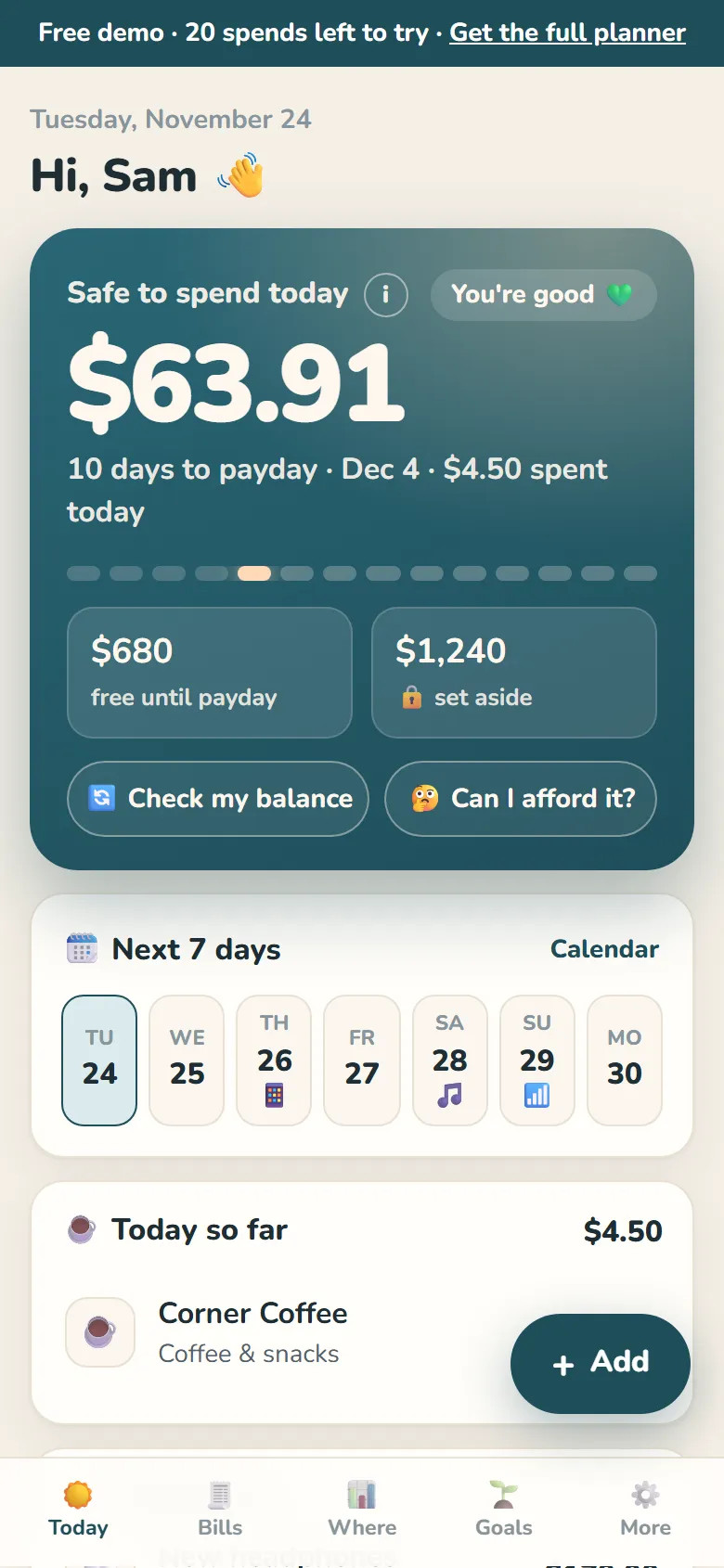
January is a long month. If your December pay comes early (many employers do this before the holidays), the gap until January’s payday is longer than usual, and the bills keep coming. Before you spend the last of your Christmas money, check that January’s rent and bills are already covered. The safe to spend calculator shows what you can spend each day until your next payday, after bills.
Already overspent?
It happens to most people at some point. Make a list of what’s owed, pay the highest-interest card first, and set a date to be clear of it. Then start a Christmas fund in January: $50 a month is $600 by next December.
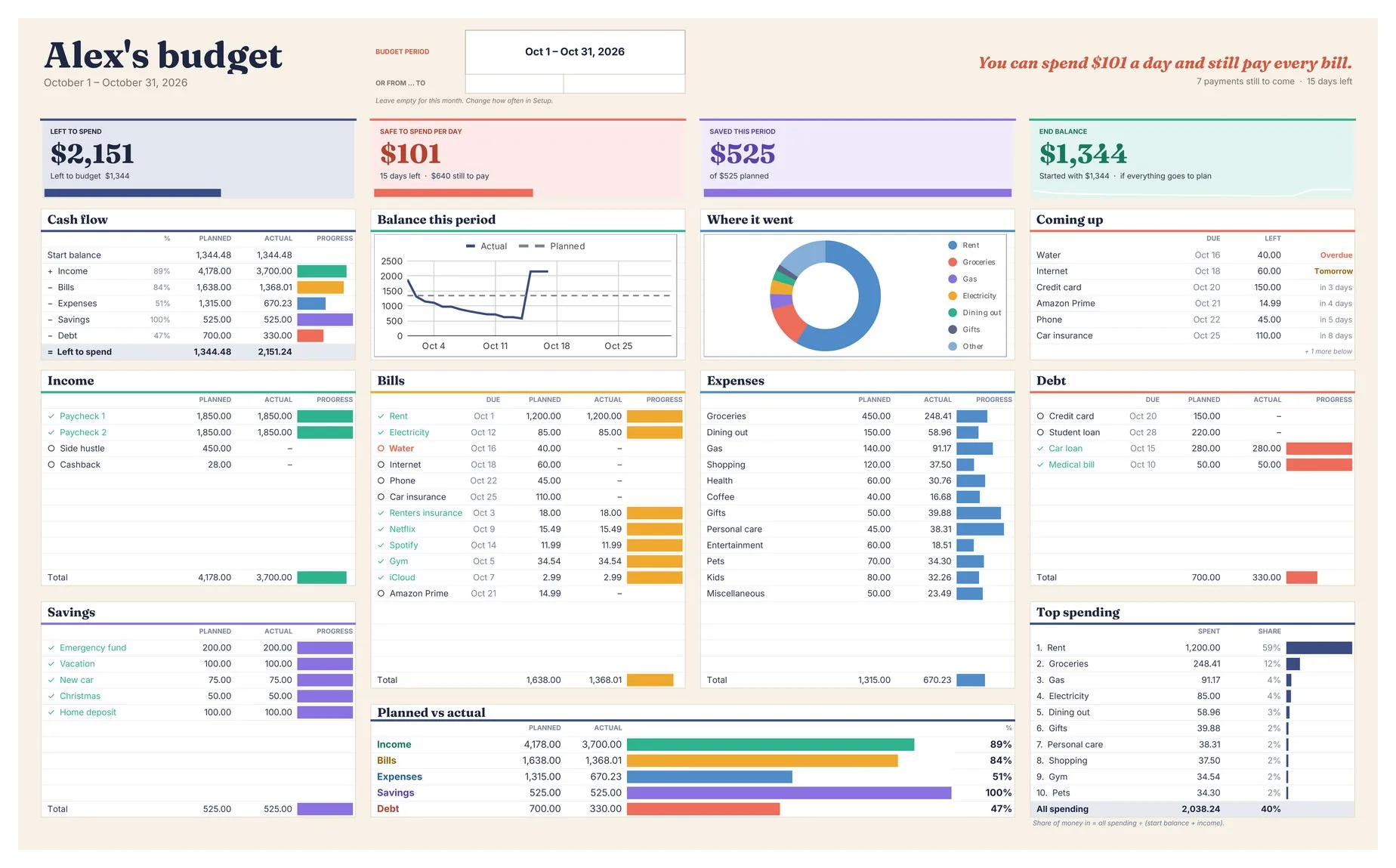
A simple budget makes this much easier to see. The Simple Budget for Google Sheets shows what you can spend per day and still pay every bill. Tidy Money does the same on your phone, with one calm number each morning.