Most budgets break on costs that don’t come every month. The car insurance renewal, new tyres, a birthday weekend, the annual subscription you forgot about. None of them are truly unexpected, they’re just irregular. A sinking fund is money you set aside a little at a time for one of those costs, so when the bill arrives, the money is already there.
Sinking fund vs emergency fund
- An emergency fund is for things you can’t plan: losing your job, a medical bill, a burst pipe.
- A sinking fund is for things you know are coming, you just don’t know exactly when, or they only come once a year.
Keeping them apart means your emergency fund stays untouched for real emergencies.
Costs people usually forget
Go through last year’s bank statements and look for anything that isn’t monthly. Common ones:
- car insurance, registration, servicing and repairs
- Christmas, birthdays and other gifts
- vet bills and pet insurance
- annual subscriptions and memberships
- medical and dental costs, glasses
- back-to-school costs, kids’ activities
- home repairs, new appliances
- travel and holidays
How much to save each month
For each fund: cost ÷ months until you need it = monthly amount.
| Fund | Cost | Needed in | Per month |
|---|---|---|---|
| Car insurance | $1,080 | 9 months | $120 |
| Christmas | $600 | 12 months | $50 |
| Car repairs | $600 a year | any time | $50 |
| Vet | $300 a year | any time | $25 |
| Total | $245 |
$245 a month feels like a lot until you remember the alternative: a $1,080 insurance bill landing in one month, usually on a credit card.
Where to keep the money
You don’t need a separate account for each fund. Most people use:
- One savings account (a high-yield one if you can) for all sinking funds.
- A simple list or spreadsheet showing how much of that balance belongs to each fund.
Move the total on payday, automatically. When a bill comes, pay it from savings and lower that fund’s balance.
What if a fund runs short?
It happens. The car needs $900 of work and the repair fund has $400. Pay the gap from the fund with the most slack (holidays often), then top it back up. That’s still far better than a credit card at 25% interest.
Make it visible
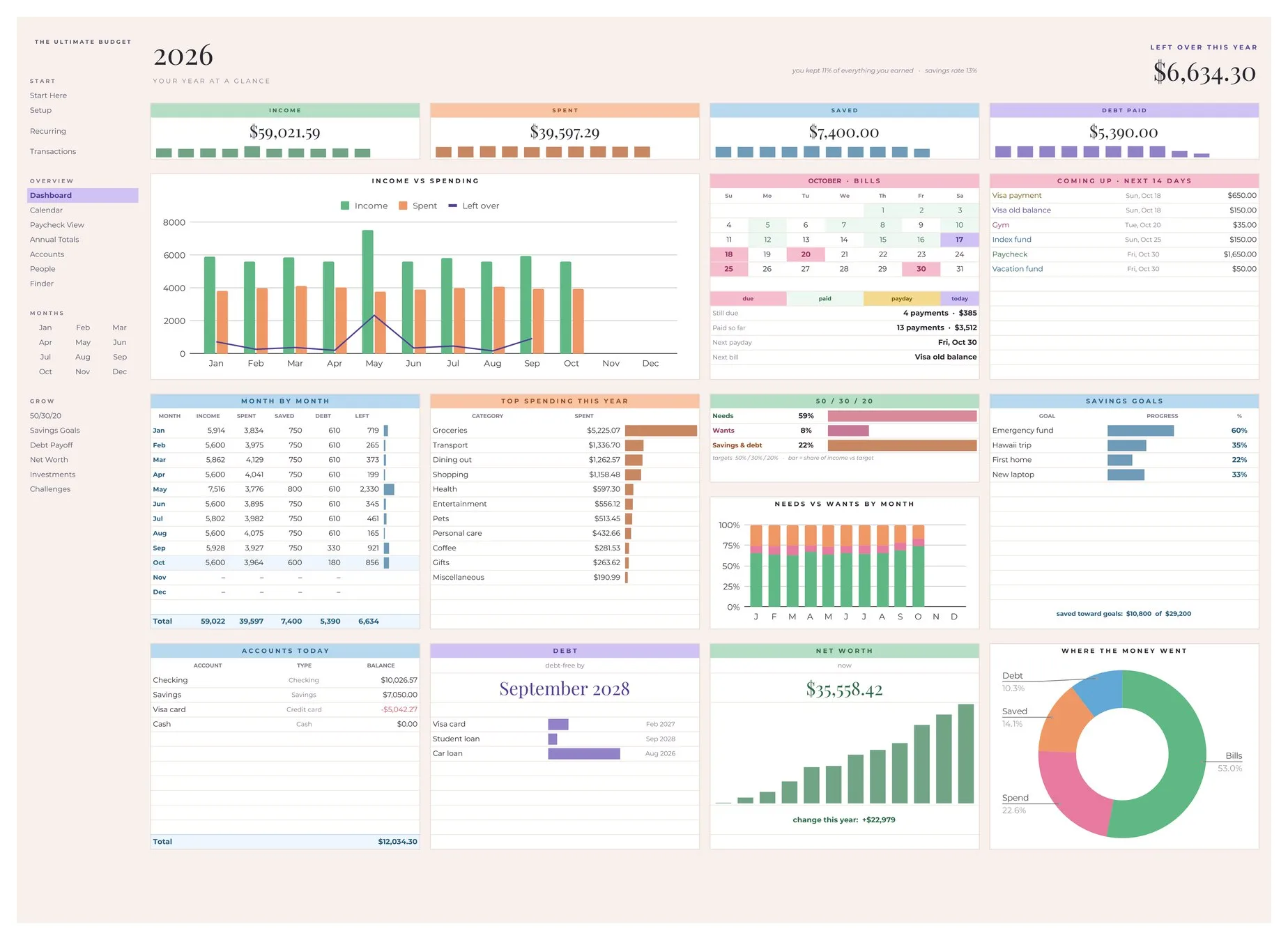
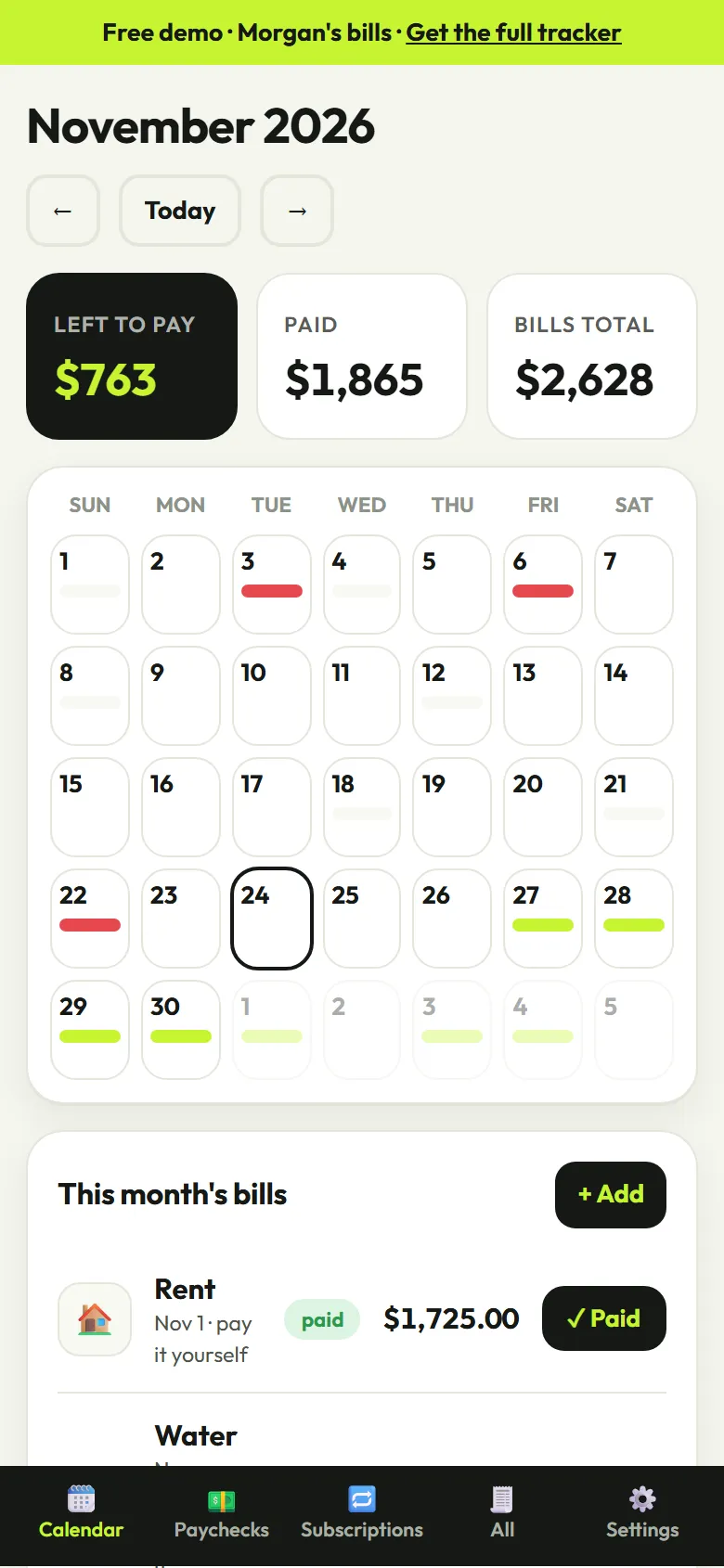
Sinking funds work best when you can see them filling up. The Ultimate Budget for Google Sheets has savings goals that fill up by themselves and a dashboard of your whole year, with yearly bills landing on the right day. If you’d rather get a heads-up before each big bill, Due Date shows every bill and subscription on one calendar, including the yearly ones.