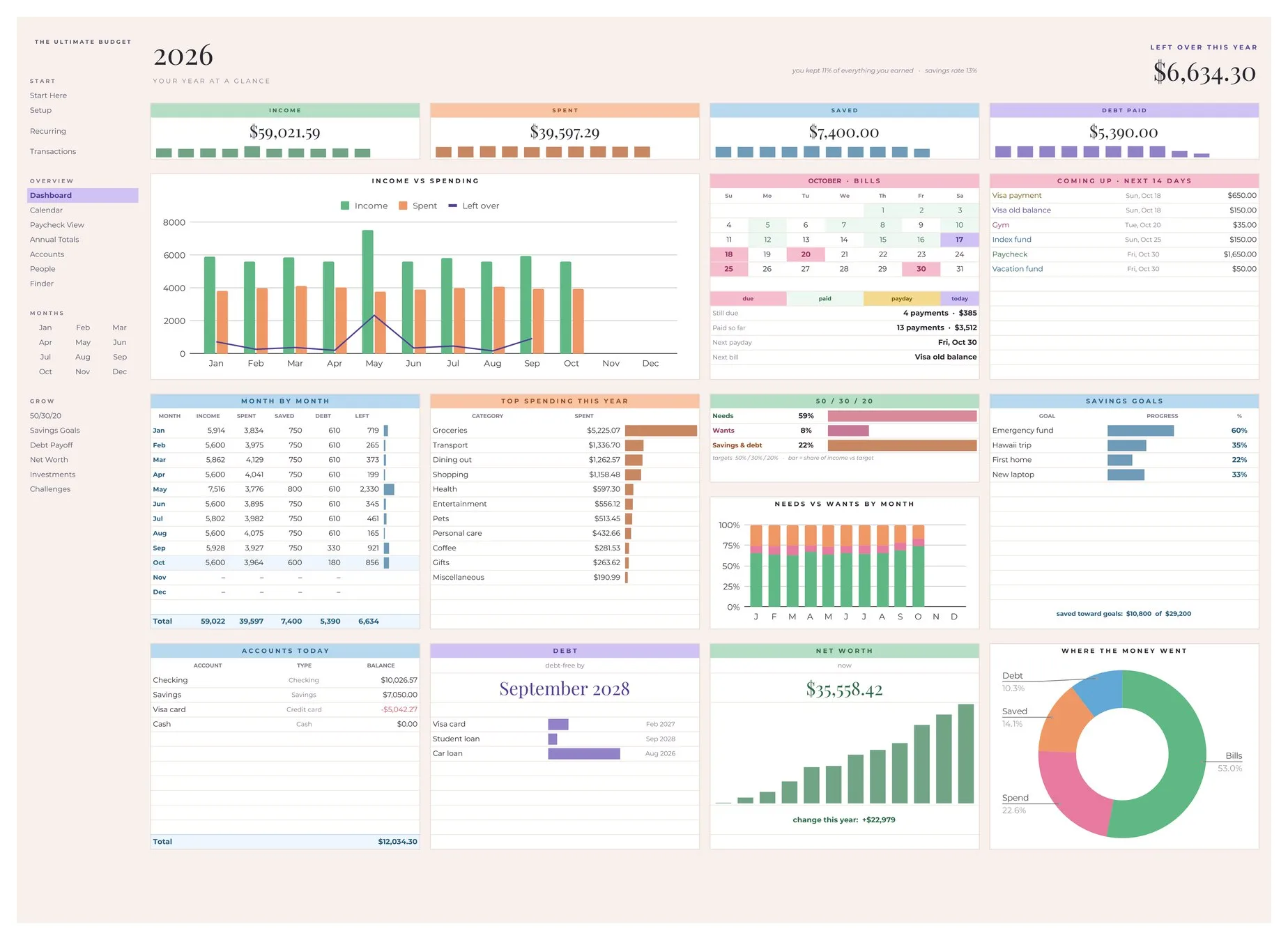
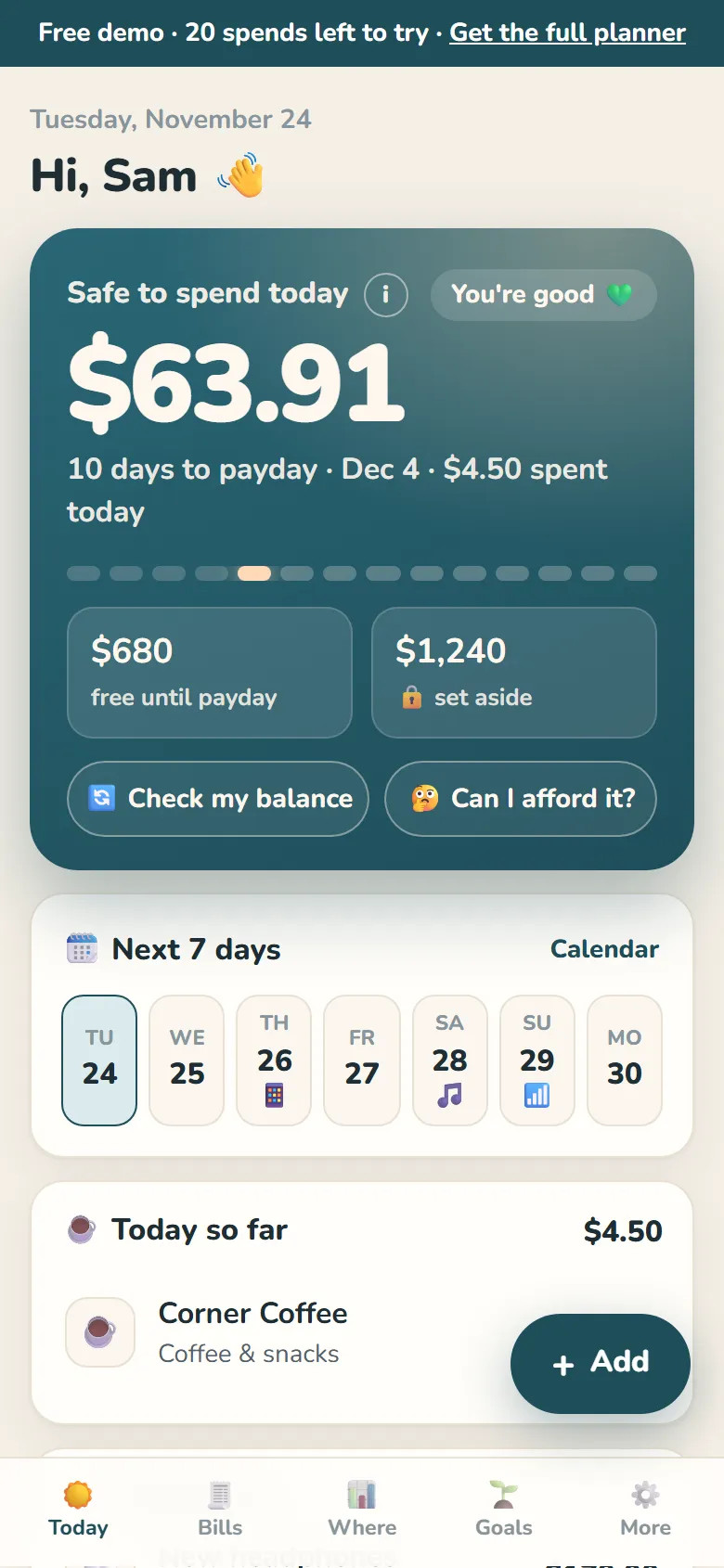
The 50/30/20 rule splits your take-home pay into three buckets: 50% for needs, 30% for wants and 20% for savings and extra debt payments. You don’t need to track every coffee. You just need three numbers and a rough idea of which bucket things go in.
What goes in each bucket
Needs (50%) are things you’d still have to pay in a tight month:
- rent or mortgage, utilities, phone and internet
- groceries (the basics, not takeout)
- insurance, transport to work, childcare
- minimum payments on debts
Wants (30%) make life nicer but could be cut if you had to:
- eating out, takeout and coffee runs
- streaming and other subscriptions
- shopping, hobbies, trips and gifts
Savings and debt (20%) is money for future you:
- an emergency fund
- retirement or investing
- extra debt payments above the minimum
A worked example: $3,000 a month
Say you take home $3,000 a month after tax. The rule gives you:
| Bucket | Share | Per month |
|---|---|---|
| Needs | 50% | $1,500 |
| Wants | 30% | $900 |
| Savings + extra debt | 20% | $600 |
| Total | 100% | $3,000 |
That $600 a month adds up to $7,200 a year. Even half of it, kept up for a year, is a solid emergency fund.
Use take-home pay, not your salary
Work from what actually lands in your account. If money for retirement already comes out of your paycheck before you see it, you’re already saving. You can count it towards the 20% or leave it out, as long as you decide once and stay consistent.
When your needs are way over 50%
This is the most common problem, especially with high rent. If needs eat 60% or 70% of your pay, the rule isn’t broken. It just tells you where the pressure is.
- Start with 60/30/10 or 70/20/10. Saving 10% is a lot better than giving up because 20% felt impossible.
- Look at the biggest need first. A cheaper phone plan saves a little. A roommate, a cheaper insurance quote or refinancing a car loan can save a lot.
- Check what’s hiding in needs. Takeout counted as groceries, or a premium TV package counted as “utilities”, makes needs look bigger than they are.
How to start this month
- Write down your monthly take-home pay.
- Add up your needs from last month’s bank statement. Don’t guess. Statements are usually higher than people expect.
- Put your 20% aside on payday, before you spend anything. An automatic transfer works best.
- Whatever’s left after needs and savings is your wants money. Spend it guilt-free.
Want to see your split right now? The free 50/30/20 calculator shows the three amounts for your pay and compares them with what you really spend.